


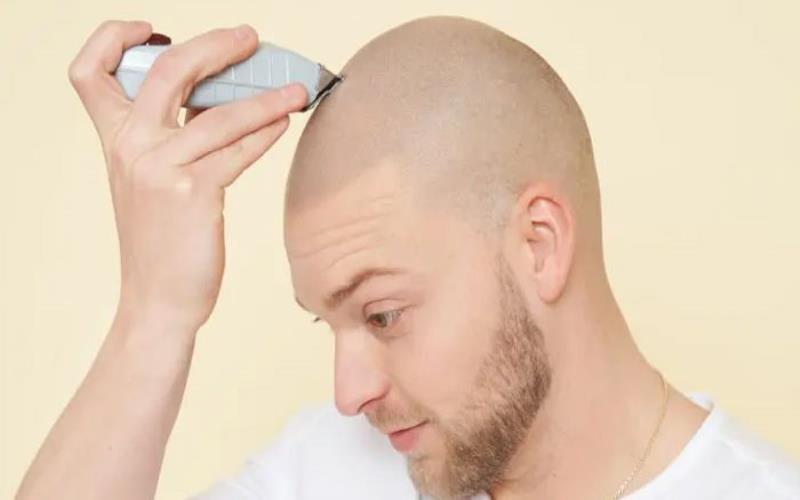
Scalp micropigmentation involves tattooing the scalp to simulate the appearance of thicker hair coverage. This cosmetic procedure is useful for camouflaging balding or thinning areas. Depending on the hair loss pattern, practitioners can tailor the treatment to suit a client’s hair needs. Here are four types of micropigmentation treatments:
1. Hairline Restoration
For clients experiencing receding hairlines or a high forehead, artists use scalp micropigmentation to create a natural-looking hairline. Before the hairline tattoo treatment begins, the artist creates a custom hairline design tailored to your individual needs and preferences. The design process factors in the shape of your face, the natural direction of your remaining hair, and the aesthetic you wish to achieve.
By strategically placing pigment and adjusting the shape and density of the hairline, artists enhance facial symmetry. Clients can choose various hairlines, including the sharp fade, all-over buzz, and rounded fade. The sharp-fade hairline includes sharp corners at the top of the forehead on both sides, while the rounded fade features a rounded-out hairline. The all-over buzz mimics the look of a shaved head or a very short buzz cut.
2. Scar Camouflage
Practitioners use scalp micropigmentation to conceal scars on the scalp from hair transplants, accidents, or surgeries. During the consultation, an artist evaluates the scar tissue to determine its texture, color, and size. The practitioner also maps out the area, factoring in the direction of hair growth, density, and the overall appearance of the scalp.
The artist selects pigment colors that closely match the client’s natural hair color and skin tone. They may use multiple closely colored shades to create depth and dimension, enhancing seamless integration with the surrounding hair. Applying multiple layers of pigment helps to achieve optimal coverage and a natural-looking outcome.
3. Density Enhancement
In cases of hair thinning, practitioners use micropigmentation to add the appearance of density to the entire scalp. The practitioner evaluates the thinning areas of the scalp to determine the extent of hair loss and the level of density enhancement. They use special tools and techniques to measure hair density and identify areas that require additional pigmentation.
Using customized shading techniques, practitioners tattoo varying densities of pigment onto the scalp. This process creates the illusion of fuller hair by mimicking the appearance of natural hair follicles. An artist may suggest periodic touchups to maintain the results and address changes in the client’s hair growth patterns.
4. Alopecia Treatment
To treat alopecia, practitioners assess which type of alopecia the client has. Alopecia areata is characterized by patchy hair loss. Alopecia totalis is when all scalp hair is lost. By tattooing pigment onto the scalp, practitioners conceal bald patches and create the illusion of a fuller head of hair. The artist uses a layering technique to build up the density and cover pigments within the bald patches. This technique allows for precise adjustments to boost uniformity and realism.
For total hair loss, the practitioner designs a treatment plan that creates the appearance of a full head of closely cropped hair or a shaved scalp. Using specialized equipment, the practitioner replicates the appearance of hair follicles across the entire scalp. This involves precisely placing pigments to mimic the natural direction of hair growth and achieve a realistic result. After micropigmentation treatment, artists provide aftercare instructions, such as protecting the delicate scalp from direct sunlight exposure.
Book an Appointment for Scalp Micropigmentation
Practitioners customize treatment to address scars, receding hair lines, hair thinning, and bald patches. A consultation with a micropigmentation artist determines the most appropriate type of treatment based on your needs and goals. Book an appointment for scalp micropigmentation to improve your appearance.
