


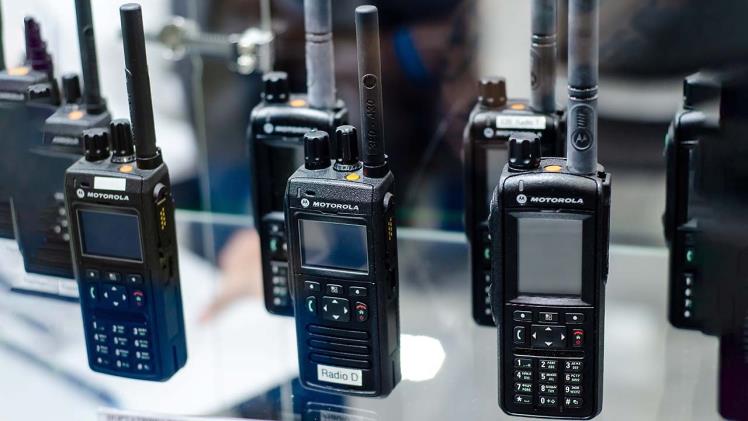
Land Mobile Radio (LMR) systems, also known as two-way radio communication systems, are essential for businesses and organizations to enable critical communication between mobile users and groups on the go. LMR systems facilitate instant push-to-talk voice communication between individuals orgroups using handheld radios, mobile radios in vehicles, desktop radios etc. Let’s take a deeper look into Land mobile radio systems market.
What are LMR Systems?
LMR systems rely on terrestrial wireless networks to provide communication services to users operating mobile radios within a designated coverage area. These radio systems employ VHF, UHF or 700/800 MHz frequencies for wireless transmissions between fixed network infrastructure like repeaters, base stations and mobile or portable radios.
Some key characteristics of Land Mobile Radio (LMR) Systemsinclude:
– Instant push-to-talk capability for instant voice communication between radios
– High reliability through use of dedicated wireless spectrum and infrastructure
– Support for group calls and messaging to entire talkgroups
– Use of standardized protocols like Project 25 (P25) for interoperability
– Ability to prioritize emergency traffic over other voice call
– Wide coverage area through repeaters and portable towers
Common Applications of Land Mobile Radio (LMR) Systems
Due to their reliability, mobility and group communication features, Land Mobile Radio systems have become essential for various public safety, commercial and industrial applications. Here are some of the major use cases:
– Public safety agencies – Police, fire, EMS rely on LMR for mission-critical field operations and dispatch.
– Utilities – Electrical, water & gas utilities use LMR to coordinate restoration work and response.
– Transportation – Buses, rail, ports use LMR to manage fleet operations and ensure safety.
– Manufacturing – Factories utilize Land mobile radio systems for warehousing, logistics and plant communications.
– Construction – Contractors rely on LMR for coordination across large project sites.
– Hospitality – Hotels, resorts use LMR to link security, facilities teams during events.
– Retail – Stores employ LMR to connect staff across multiple facilities.
Key Components of a Land Mobile Radio (LMR) Systems
A full-fledged LMR system consists of different components working in unison to provide seamless voice and data communication services.
Mobile/Portable Radios: Handheld devices allow personnel to communicate on the move.
Repeaters: High-power transmitters extend coverage by receiving & retransmitting signals.
Base Stations: Stationary transmitters connect to backbone networks and provide connectivity to repeaters.
Network Infrastructure: Includes switches, routers that interconnect different system elements.
Backoffice Solutions: Software handles subscriber management, billing, logging and other support systems.
Each component plays a vital role in delivering reliable LMR communications across geographic regions and indoor/outdoor environments. System vendors offer integrated solutions for turnkey deployments.
Latest Trends in LMR Systems
To keep pace with evolving needs, Land Mobile Radio systems are embracing new technologies and functionalities:
– Digital migration: Transition to digital standards like P25 improves spectrum efficiency, security, features.
– Integrated LTE connectivity: Hybrid systems leverage commercial 4G networks for additional broadband capabilities.
– IoT integration: Sensors, cameras, and other IoT devices integrate with LMR infrastructure for enhanced situational awareness.
– Push-to-talk over cellular: PTT solutions enable LMR-like group communication over cellular networks.
– Mission-critical push-to-talk (MCPTT): Next-gen platform for IP-connected critical communications applications.
– Location services: Real-time tracking of personnel and fleet using tags or mobile device location data.
– Managed services: Outsourced network monitoring, maintenance services help optimize LMR investments.
The evolution of LMR is expanding its role as the fail-safe platform for managing day-to-day operations as well as emergency incidents for both public and private organizations.
Market Outlook
For more detail on the global LMR market outlook, refer to the market research report published on Coherent Market Insights. While the market continues to grow steadily driven by demand across various sectors, North America currently dominates global revenue owing to early technology adoption and major investments in upgrading public safety networks in the region. However, increasing spending on smart city initiatives in Asia Pacific is expected to be a key growth driver going forward. Factors like the need for reliable communication solutions, growing investments in critical infrastructure and emphasis on workforce safety will remain strong propellers sustaining long term LMR market prospects globally.
